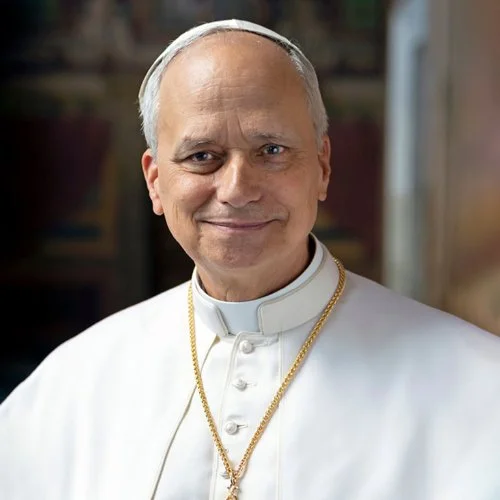
Pope Leo: How can we ensure AI will promote the common good?
By Roland Ashby
AI can be a great boon, but its lack of DI – Deep Intelligence – poses a grave threat to humanity. Deep Intelligence is what theologian Maggie Ross would call “Deep Mind”, a deep wellspring of love, wisdom, empathy and compassion that lies at the heart of our humanity, and indeed only this can lead to the full flowering of our humanity.
Only from this place of DI will we be able to guard against the dangers of AI, and pursue the common good, a key concern of Pope Leo’s encyclical Magnifica Humanitas (“Magnificent Humanity”).[1] He asks: “How can we ensure the development of artificial intelligence truly serves the common good, and not merely to concentrate wealth and power in the hands of a few?”
In commenting on Magnifica Humanitas theologian Matthew Fox writes: “The common good is everything. Will the amazing capacity of AI be used for the common good or the common demise? So much depends on the decisions we make currently, as AI is expanding its wings in awesome (and potentially awful) ways.”[2]
Priest and blogger Cameron Trimble says that intelligence by itself “does not create compassion, self-control, or clear ethics. History shows this again and again.” And in developing systems capable of imitating human capacities, Trimble adds that we are “simultaneously weakening some of the very qualities that make us most human: sustained attention, contemplation, patience, vulnerability, presence, and the ability to remain fully encounterable to one another.”[3]
Contemplation is one way to tap into DI, or Deep Mind, the eternal wellspring of love, wisdom, empathy and compassion that can be found deep within the human heart.
In the Christian understanding, this is the Holy Spirit, the stream of love that flows constantly between Jesus and his Father.
When we immerse ourselves through prayer and meditation in this stream of living water flowing within, then our perceptions of our humanity can be transformed, so that where we once saw separation and division, we now see our common humanity and essential unity.
In 1958 the great American Trappist monk, Thomas Merton, whose life was steeped in silent contemplation, had an intense experience of this essential unity in a life-changing epiphany at the intersection of Fourth and Walnut, a busy shopping district in downtown Louisville, Kentucky.
In observing strangers as they walked by, he said:
“I was suddenly overwhelmed with the realisation that I loved all these people, that they were mine and I theirs, that we could not be alien to one another even though we were total strangers … Then it was as though I suddenly saw the secret beauty of their hearts, the depths of their hearts … the core of their reality, the person that each one is in God’s eyes. If only they could all see themselves as they really are. If only we could see each other that way all the time. There would be no more war, no more hatred, no more cruelty, no more greed …[4]
Such a vision of what it means to be fully human is a necessary counterweight to any technological developments which fail to recognise and promote the fullness of our humanity.
Only the Deep Intelligence of Deep Mind can ultimately safeguard respect for human dignity and worth, and ensure that AI is subject to ethical governance, and as Pope Leo says, used to promote the common good and the flourishing of every person.
References:
[1] https://www.vatican.va/content/leo-xiv/en/encyclicals/documents/20260515-magnifica-humanitas.html
[2] See: Some Highlights from Pope Leo’s New Encyclical - Daily Meditations with Matthew Fox
[3] From a reflection on Substack by the Rev’d Cameron Trimble: Who Is Forming the Mind? A Reflection on Pope Leo's Encyclical, Part 2
[4] From Conjectures of a Guilty Bystander